
Entryway Organization: A Checklist for Mudroom and Small Hallways
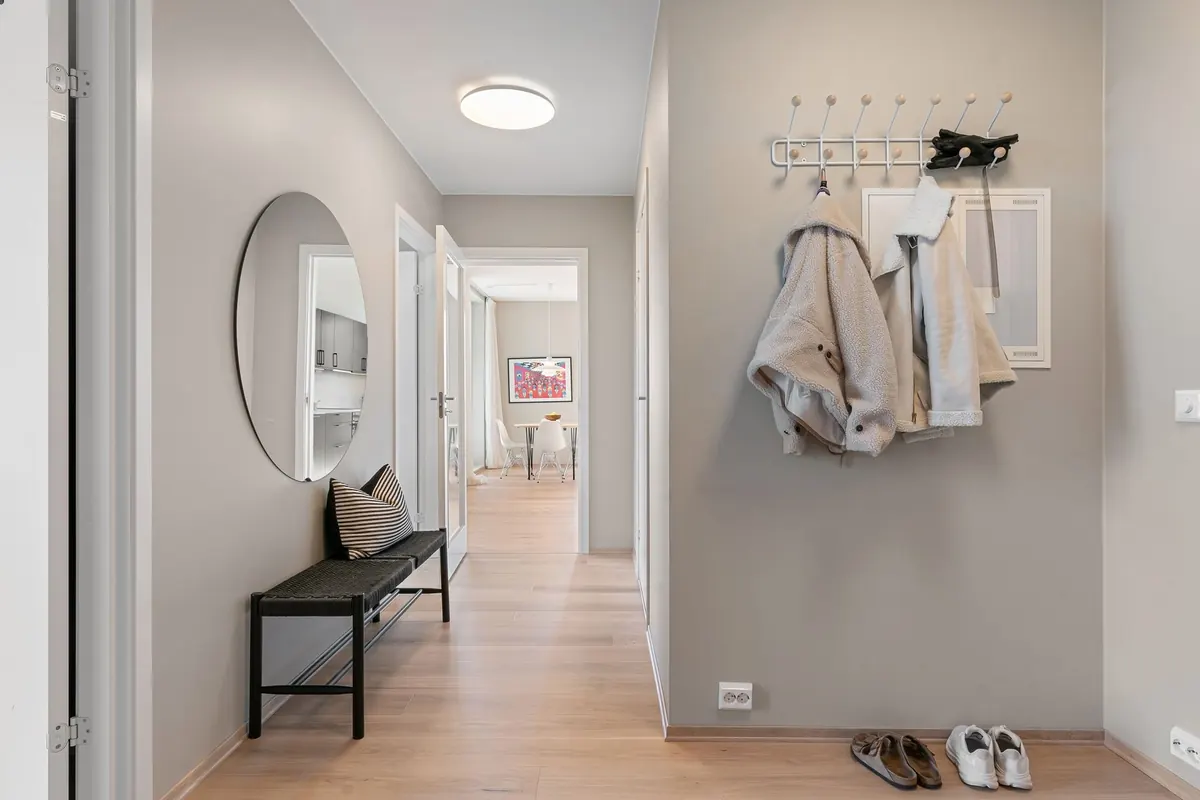
Entryways fail for a predictable reason: too much passes through them, and not enough of it has a place to land. A mudroom with built-in cubbies can be buried under boots and backpacks by November. A three-foot hallway with one sturdy hook can stay calm all winter, provided that hook is in the right spot and holds the right thing.
What follows is a working checklist. It is not a shopping list — most of it can be done with what you already own — but a set of decisions about what lives near the door, what visits briefly, and what never comes in at all.
Start With the Landing Zone
Before you buy a single basket, decide what the entryway is actually for. It is a transit zone, not a storage room. Things should move through it daily. Anything that stays for months belongs somewhere else in the house.
Choose one flat surface within arm's reach of the door — a shelf, the top of a shoe cabinet, a slim console no deeper than a foot. That surface gets three jobs and no more: a tray for keys and phones, a spot for sunglasses and the dog lead, and a clear edge for whatever you're carrying in. Any surface wider than your reach will collect clutter, because clutter grows to fill the space it's given.
Next, count your hooks. You need roughly two per person: one for the coat in rotation, one for a guest or a wet layer. If you have a closet, half of it should be empty. An entryway closet that's packed to the rod is a closet nobody uses.
Shoes: The Floor Is the Battleground
Shoes are the single biggest source of entryway chaos, and they respond well to a hard limit. Two pairs per person at the door: the ones being worn this week, and one backup. Everything else goes to a bedroom closet or an off-season bin.
A boot tray or shallow rimmed mat catches winter melt and summer grit. A two-tier rack keeps pairs stacked instead of scattered, and an open crate on the floor works better for small children than a closed bin — if a four-year-old can't see the shoes, they won't land in it.
The barefoot test
Walk from your front door to the kitchen without stepping around anything. If you can do that on a wet Tuesday in February, the shoe system works. If you can't, you have one too many pairs at the door, not one too few shelves.
Coats, Hats, and Everything Damp
Hooks beat hangers for daily coats because they take up less width and require no coordination. But heavy parkas pull at the shoulders and strain a single screw, so use wide, weight-rated hooks on a rail fixed into a stud, and keep the good wool coat on a hanger in the closet instead.
Children need their own hooks at their own height — around shoulder level for them, not for you. A row of low hooks costs very little and removes the daily negotiation about hanging things up.
Wet gear needs air. Leave a hand's width between hooks so damp coats dry instead of milking each other, and put a drip tray or washable mat underneath. Add a small basket for mittens, hats, and scarves; a single basket beats six hooks for small soft things that otherwise end up on the floor. An umbrella stand by the door, or a tall bucket, keeps wet canopies off the floorboards.
Keys, Wallets, and Small Items
Small items are what turn a tidy entryway into a junk drawer with a doormat. Give each category one designated home and keep the number of homes small.
- Keys: one hook or shallow bowl by the door, used by everyone. If you have two cars, two hooks — not a pile.
- Phones and wallets: a single charging spot with one cable, out of the walking path.
- Dog lead and poo bags: a hook and a small tin, both at the door, so the walk doesn't require a search.
- Sunglasses, spare keys, stamps, sunscreen: one lidded box or shallow drawer. If it doesn't fit, it moves.
- Reusable shopping bags: a mesh bag or carabiner holding them flat. Twenty tote bags is not a system.
The test for this zone: a guest should be able to find a place for their keys in under five seconds without asking.
Mail and Paper: Stop the Pile at the Door
Paper is the quietest kind of clutter because it arrives flat and looks harmless. Handle mail once, standing at a small bin with a lid next to the door. Junk and envelopes go straight in. Anything needing action goes into a single slim letter tray or wall file. Anything to keep goes to a folder in the room where you actually do paperwork.
Never create a "later" pile at the door. A later pile becomes a stack, and a stack becomes the thing you shove into a bag when guests arrive. If you deal with receipts and bills at a desk, put a small basket by the door purely for carrying paper upstairs once a day. Check what your local recycling service accepts before tossing everything in — rules vary by area.
Bags, Backpacks, and the Seasonal Swap
Every bag-owning person gets one hook, one basket, or one cubby. Backpacks get emptied the same evening they come home — lunch containers out, notes on the counter, bag hung up. A backpack that never gets emptied is just a portable junk drawer with straps.
Twice a year, when the weather turns, do a single swap. Bring the off-season bin to the door, move the sandals or the snow boots wholesale, and carry the outgoing bin back to storage. Twenty minutes, twice a year, is all this takes. If a bin won't close, the answer is fewer items, not a bigger bin.
The Five-Minute Reset That Keeps It Working
Any entryway drifts. The fix is a short, boring routine rather than a big clean-out. Each evening, or every Sunday if evenings are hectic, spend five minutes on four moves: shoes to the rack, coats to hooks, mail to the bin or tray, keys to the bowl. Give each person one basket so tidying is a matter of dumping rather than sorting.
Revisit the setup whenever the household changes — a new school year, a new job, a new dog, a growing child. A system that worked in September may not fit in January, and that's normal. If clutter keeps returning to one spot, the storage is wrong for how that spot is actually used. Move the hook, add the tray, cut the number of pairs at the door. Entryway order isn't a personality trait. It's a few good decisions, repeated.
Photo: Lisa Anna / Pexels