
Vinegar vs. Bleach vs. Baking Soda: Which Cleaner for Which Surface?
Most of us keep vinegar, bleach, and baking soda within arm's reach of the sink and treat them as interchangeable. They aren't. One is an acid, one is a strong oxidizer, and one is a mild alkali with just enough grit to scrub. Reach for the wrong one and you can etch a stone countertop, dull a sealed floor, or fill a small bathroom with fumes you really don't want to breathe. What follows is what each cleaner does well, what it quietly ruins, and the combinations to keep far apart.
Start with the chemistry
Vinegar is acetic acid, usually around 5% in the bottle you buy at the grocery store. Acids dissolve mineral deposits, which is why vinegar is so effective on limescale and hard water spots. Baking soda is sodium bicarbonate, a mild base. It neutralizes odors, softens stuck-on food, and gives you gentle abrasion without gouging most surfaces. Bleach — sodium hypochlorite — is an oxidizer. It doesn't scrape or dissolve so much as attack: killing germs, lifting mold stains, and stripping dye out of fabric.
The short version: vinegar dissolves, baking soda scours, bleach disinfects. Match the tool to the job and you'll spend less time scrubbing and less money replacing things you damaged.
Vinegar: for minerals, glass, and rinse cycles
Vinegar earns its place wherever hard water has left a mark. Fill a coffee maker's reservoir with a 1:1 mix of white vinegar and water, run it halfway, let it sit for 20 minutes, then finish the cycle and run two plain water cycles after. Drop a showerhead into a plastic bag of vinegar, tie it around the pipe, and leave it overnight — the crust around the nozzles wipes off in the morning. A 1:1 spray does a good job on glass, mirrors, and chrome faucets.
It's also a decent fabric softener substitute: add about half a cup to the rinse cycle to strip detergent residue from towels, and a splash in a musty load helps with odor.
Where vinegar does damage
- Natural stone. Marble, limestone, travertine, and similar calcium-based stone etch permanently. The mark looks like a dull watermark and never buffs out.
- Cement-based grout. A one-off spray is fine; repeated scrubbing slowly eats the grout line.
- Aluminum, cast iron, and waxed furniture. Vinegar pits aluminum, strips the seasoning off cast iron, and dulls wax finishes.
- Anything you're trying to disinfect in a hurry. Vinegar is not a substitute for a disinfectant after raw meat or during a stomach bug. Clean with soap and water, then use a product labeled for disinfecting.
Baking soda: the gentle scrub
Sprinkle baking soda on a damp sponge and it tackles stained kitchen sinks, stovetop splatter, tea and coffee rings inside mugs, and the crusty bottom of a scorched pot. For the pot, add water and a couple of tablespoons, simmer for ten minutes, then scrape with a wooden spoon. In the fridge, an open box absorbs odors; on carpets, a light sprinkle left for 15 minutes before vacuuming freshens the room.
Two things worth knowing. Baking soda needs a partner for grease — it doesn't cut oil on its own, so pair it with a drop of dish soap. And it is an abrasive, however mild, so use a soft cloth and light pressure on polished or glossy finishes. Skip it on nonstick pans, where it dulls the coating, and on aluminum, which can discolor. Leave it out of your plumbing, too; a baking soda and vinegar "drain cleaner" makes a satisfying fizz and does almost nothing for a real clog.
Bleach: small amounts, real cautions
Bleach is the one to respect. Used correctly — diluted, in a ventilated room, with gloves — it disinfects toilet bowls, bathroom tile, sinks, garbage cans, and white laundry, and it removes mold staining from non-porous surfaces. Read the label for the right dilution and the contact time, then let it sit for that full time. Wiping and rinsing immediately defeats the purpose.
Keep bleach off wood, colored fabric, and metal you plan to leave wet, since it corrodes and strips. It also weakens with age, so a bottle that's been sitting in a hot garage for two years may not disinfect much at all. Store it dark, cool, and away from other cleaners.
If mold covers more than a small patch, keeps returning, or you can smell it in a room, the real problem is moisture. Cleaning won't fix it — that's a job for a qualified contractor, and worth getting professional advice on.
What never to mix
This is the section to remember. Mixing the wrong two bottles can create gas that damages your lungs in a small space.
- Bleach + vinegar (or any acid). Releases chlorine gas. This includes toilet bowl cleaners and descalers.
- Bleach + ammonia. Releases chloramine vapors. Ammonia hides in many glass cleaners and some floor cleaners.
- Bleach + hydrogen peroxide or rubbing alcohol. Produces irritants you don't want to inhale.
- Vinegar + hydrogen peroxide in the same bottle. Fine used one after the other with a rinse; not fine stored together.
- Baking soda + vinegar. Harmless, but the two neutralize each other. You get bubbles and salt water, not extra cleaning power.
If you do accidentally mix something and start coughing or your eyes water, get outside, open windows, and call a poison control service or a medical professional if symptoms don't settle. Never store these three in unlabeled spray bottles, and keep them apart on the shelf so nobody grabs two at once.
A quick surface-by-surface cheat sheet
- Glass and mirrors: vinegar and water, buffed with a microfiber cloth.
- Granite or quartz counters: dish soap and warm water. Vinegar on sealed granite is a gamble; on marble, never.
- Stainless steel sink: baking soda paste, scrubbed with the grain, then rinsed.
- Toilet bowl: bleach-based cleaner alone, lid up, window open. Never combined with a separate acid cleaner.
- Cutting boards: hot soapy water first; a diluted bleach rinse for raw meat, following the label.
- Wood floors and furniture: a barely damp cloth with a cleaner made for wood. No vinegar, no bleach.
- Shower tile and grout: baking soda paste for scum, vinegar for limescale, bleach for mold stains — one at a time, with a rinse in between.
- Coffee maker and kettle: vinegar, followed by two plain water cycles.
Pick one, then put the others away
Good cleaning is mostly about restraint. Choose the single product that matches the problem, use the least aggressive version that works, and finish with a rinse. If you only do one thing after reading this, do this: sort your cleaning bottles so bleach lives nowhere near vinegar or anything ammonia-based, and never pour two of them into the same bucket thinking you'll get double the result. You won't. You'll just get fumes.
Label your spray bottles, keep a dedicated microfiber cloth for each job, and your cabinets will stay safer — and your surfaces will last longer.
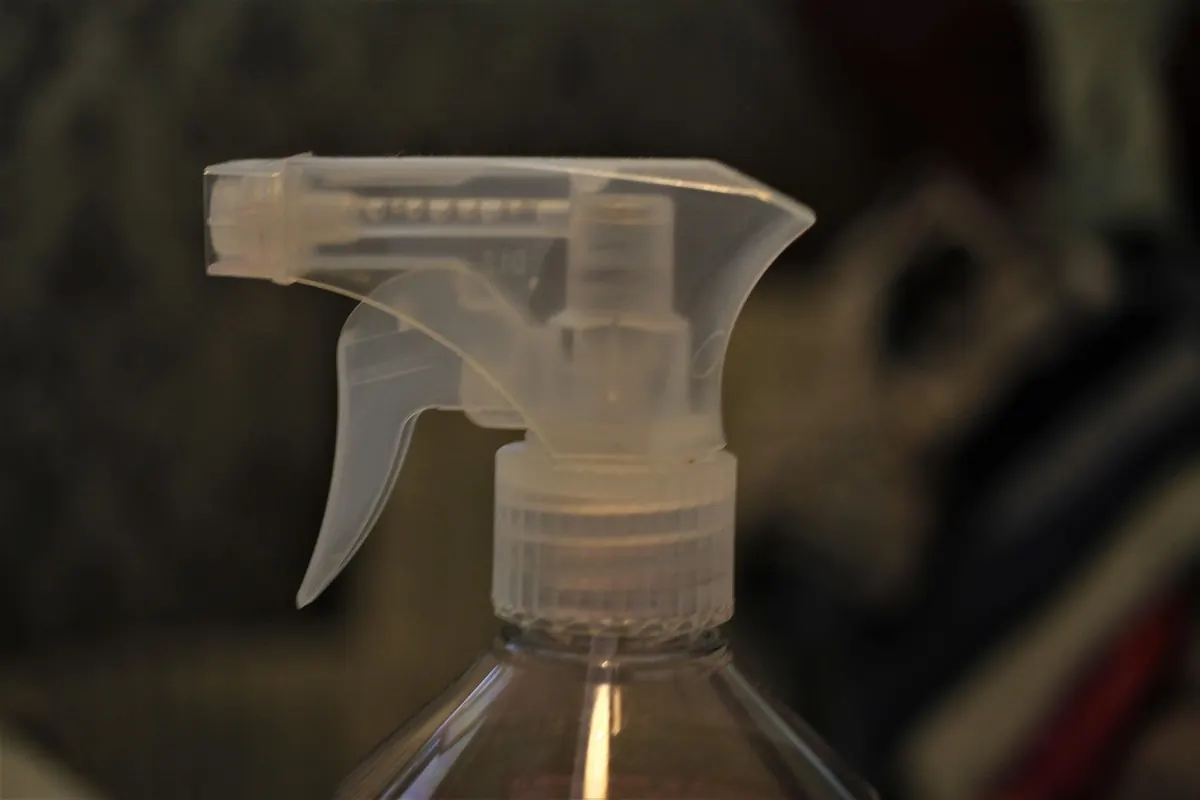
Photo: Carola68 / Pixabay